
Let's start with what couples actually worry about
You've probably thought something like: "If I suggest using a vibrator, won't they think I'm not satisfied? Won't they feel replaced?" Or maybe: "I want to bring this up, but I don't know how to say it without sounding like there's a problem." Both thoughts are completely normal. Both are also based on a misunderstanding about what introducing a lemon vibrator actually does to a relationship.
Here's the truth: introducing a clitoral vibrator together doesn't add a third thing to your sex life. It removes the one thing that's been silently there the whole time. That thing is performance pressure.
The difference between toys as a solution and toys as an exploration
This matters because it changes the whole conversation. If you frame a lemon vibrator as "something to fix an issue," it sounds like there's a problem. If you frame it as "something we can explore together," it sounds like adventure. Your nervous system can tell the difference, and so can your partner's.
Most couples introduce vibrators after one person has brought them up in a moment of vulnerability. "I have trouble finishing," or "My pleasure has changed." In those moments, the vibrator can start to feel like a medical device instead of a tool for connection.
The shift happens when you reframe the conversation. Instead of "I need this because I'm not responding like I used to," you could say: "I found something I'm curious about, and I'd love to explore it with you." That's completely different. One comes from lack. The other comes from invitation.
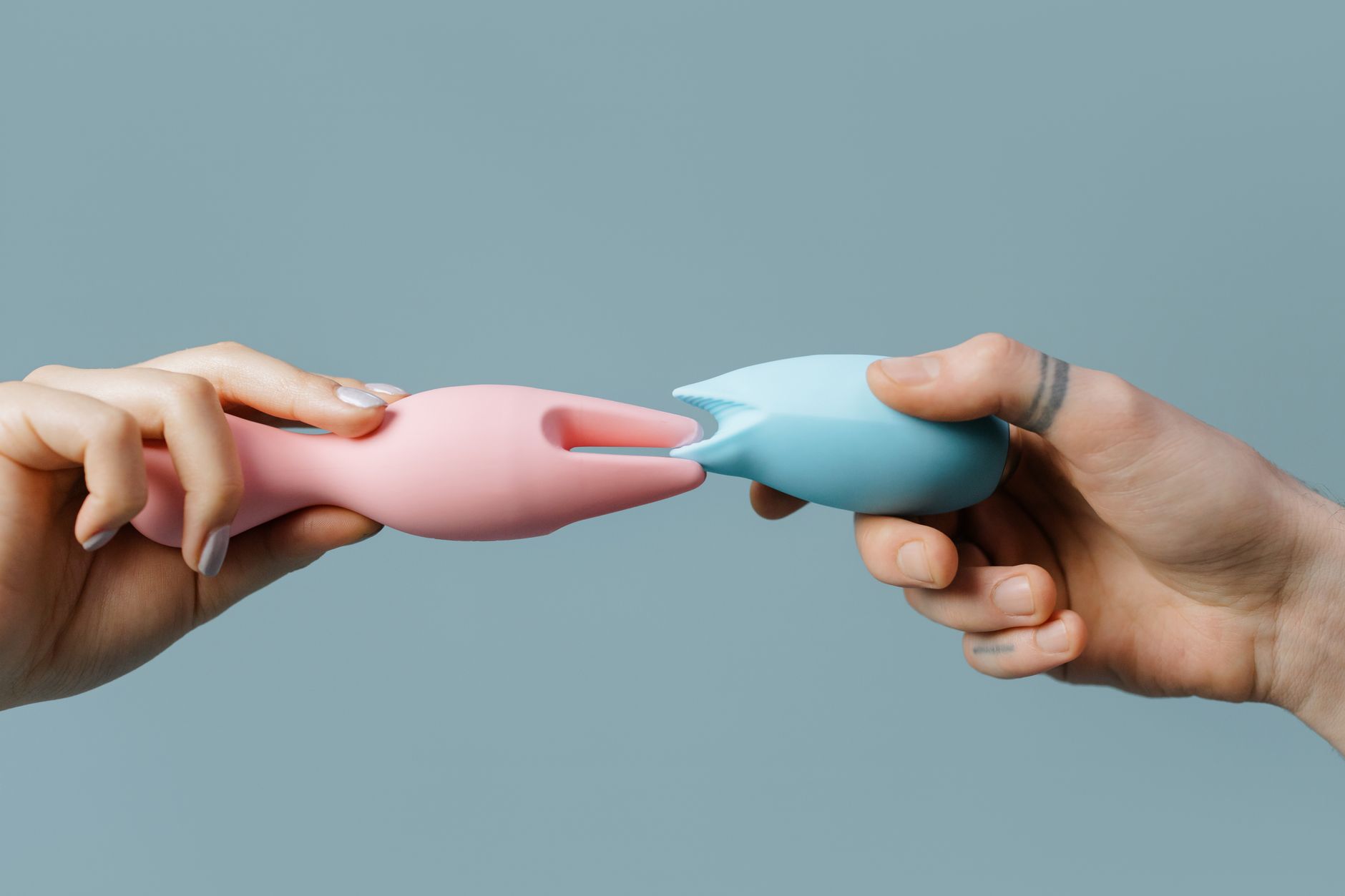
Photo by cottonbro studio on Pexels
How to actually bring it up
Timing and tone change everything. Here are three ways couples actually do this without creating tension.
The casual approach. You're talking about something you've read or learned. "I was reading about how these clitoral vibrator things work differently than regular vibrators, and I'm lowkey fascinated. Have you ever thought about trying one?" This works because you're sharing curiosity, not asking for permission or making a request that feels urgent.
The partnership approach. You frame it as something you want to experience together. "I love how we're always figuring things out as a team. I'd like to try something new together. Would you be open to exploring a lemon vibrator with me?" This makes it about you as a unit, not about one person needing something from the other.
The playful approach. Light, no pressure attached. "I'm thinking about trying something. Want to be my test subject?" This works with partners who like humor and spontaneity. It removes the weight.
What all three have in common: the conversation happens outside the bedroom. You're not bringing this up mid-sex or right before. You're giving your partner time to sit with it, get curious, ask questions. That's where the pressure evaporates.
What actually happens the first time
Most couples describe it as surprisingly simple. You're touching each other. One person introduces the vibrator. And something shifts immediately. Usually it's just: "Oh, that's interesting." Not fireworks. Not revelation. Just a new sensation you're both paying attention to.
Here's what tends to help.
Start with your partner using it on themselves, not you using it on them. This sounds small, but it's huge for pressure management. Your partner stays in control of sensation, speed, positioning. You're just present and watching. That's intimate without being performative. After a few minutes, they might hand it to you. They might not. Either is fine.
Use it as part of foreplay, not the main event. A lemon vibrator works best when you've already been touching each other for 10 minutes or so. You're already aroused, the nervous system is already relaxed. Now you're adding something new to an existing rhythm, not starting from zero.
Keep talking, but keep it simple. "Does that feel good?" "Want me to move it?" "I like watching this." Feedback matters, but it doesn't have to be elaborate. Short sentences keep the energy flowing.
Use it together. After you both understand how it works, try it while you're also touching your partner in other ways. This is where it stops feeling like a tool and starts feeling like an extension of what you're already doing. You're stimulating them with the vibrator while you're also kissing them, or while they're touching you back. It becomes one texture in a bigger conversation.
The performance pressure thing, explained
Here's what I see in my practice over and over: most couples who've been together for years develop a pretty predictable rhythm. They know what works. It's comfortable. But comfort and pressure can live in the same space. The pressure is subtle. It's the expectation that you'll respond in a certain way. That you'll finish on a certain timeline. That you'll want sex on certain nights. That you'll enjoy the same things you used to enjoy.
When you introduce something genuinely new, something neither of you has done before, that pressure temporarily lifts. You're both simultaneously confused and curious. You can't perform something you've never done. You can only explore it.
A lemon vibrator does this in a way that's actually low-stakes. It's not renegotiating the whole relationship. It's not asking someone to be vulnerable about something painful. It's just: "Here's this thing. Let's see what it does." And in that permission to just see what it does, a lot of couples find themselves touching and talking in ways they haven't in years.
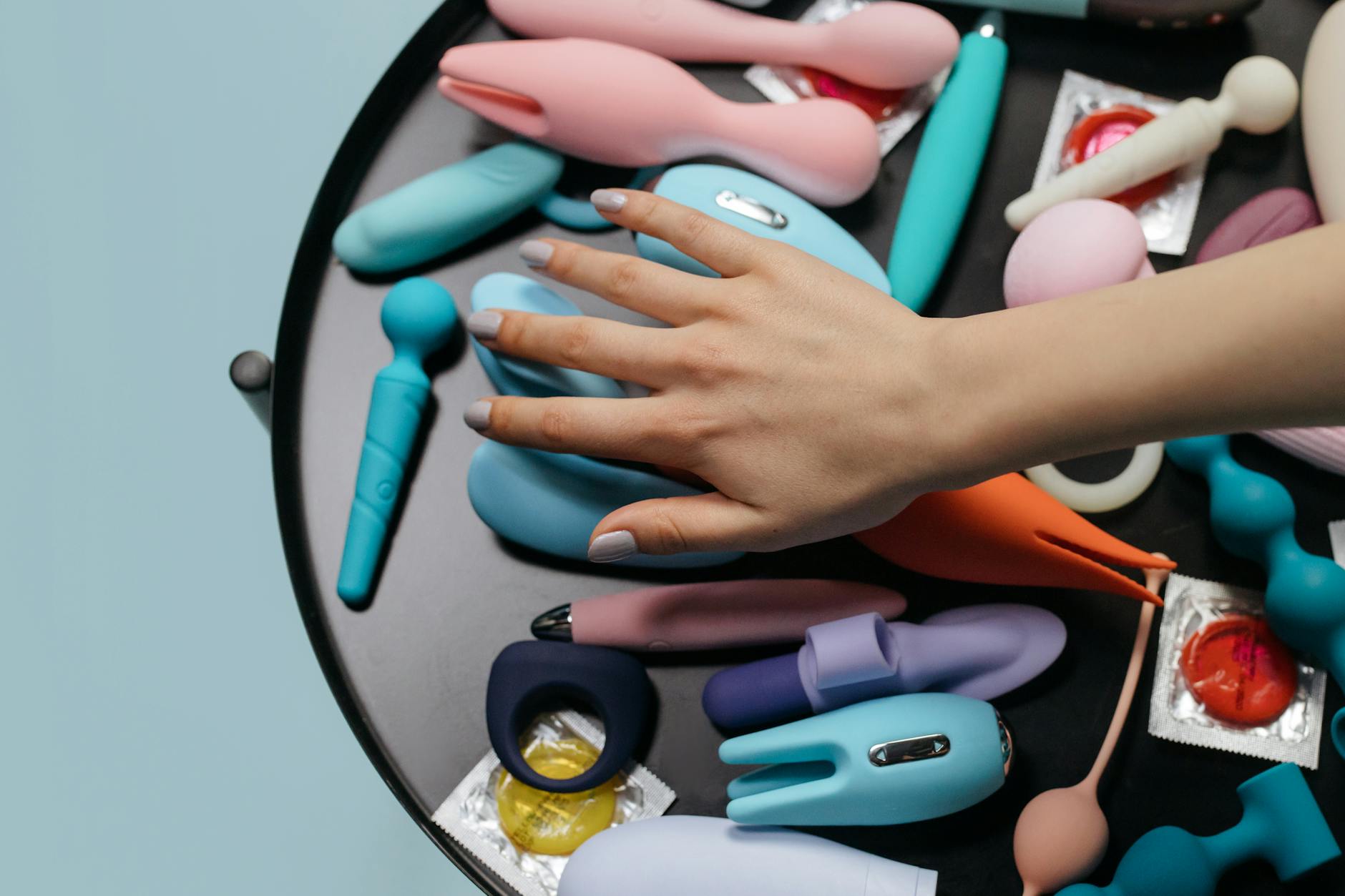
Photo by cottonbro studio on Pexels
What to do if it feels weird at first
It often does, and that's completely normal. You're doing something new. Your brain is going to narrate it. You might feel self-conscious. Your partner might too. Here's the move: name it.
"This feels kind of weird, right?" That's usually when both people laugh and relax. The weirdness was the elephant in the room. Once you say it, it becomes just a small adjustment, not a sign that something's wrong. Weirdness is just the discomfort of trying something unfamiliar. It passes.
If you find that after a few tries it still feels disconnected, pause and ask your partner what they need. Maybe they need more foreplay. Maybe they need less pressure about finishing. Maybe they need to feel more in control. This is actually information. Use it.
What happens after
Most couples fall into one of three patterns. Some people use a lemon vibrator regularly. Some use it occasionally. Some try it once and go back to what they were doing before, but with less pressure now because they know it's an option.
All three patterns are fine. The point isn't to become a vibrator couple. The point is that you explored something together, you stayed present with each other, and you broke a small routine. Often that's enough to shift the whole feeling of sex in a relationship.
I've had clients tell me that the conversation they had before even trying anything was the best part. The conversation where they admitted that they wanted something to feel different. Where they asked for something they'd been scared to ask for. Where they said: "I trust you enough to be curious about this together."
That's where the real intimacy lives.
FAQ: What couples actually ask
Does using a vibrator mean my partner isn't enough?
Not even a little bit. A vibrator isn't a person. It can't hold you. It can't tell you it loves you. It can't build a life with you. What it does is provide a different kind of sensation that your partner's body literally cannot provide. That's not a replacement. That's expansion. Your partner is still enough. You're just expanding what "enough" looks like together.
What if my partner says no?
Then you have a conversation about why, and you listen without defense. Sometimes it's genuinely not their thing. Sometimes it's anxiety or shame. Sometimes they need more information. You're not trying to convince them. You're understanding what they need. And if they consistently say no, you respect that. But you might also ask: "Is there something we could try together that would feel better for you?" Often the answer isn't "no vibrators." It's "I need to feel more connected first" or "I need us to have a different conversation before we try anything new."
How do I know which vibrator to get?
If you're new to this together, a lemon clitoral vibrator is honestly the easiest entry point. They're intuitive. The suction sensation feels completely different from anything hands alone can do. They're not intimidating. They work on most bodies. Start there, and you'll both understand what you actually like before you expand your options.
What if we're nervous about it being painful or too intense?
Start on the lowest setting. You control the pressure. The beauty of a lemon vibrator is that you can modulate the sensation way more easily than a traditional vibrator because suction works differently. You can pull it away. You can use it over underwear at first. You can take five minutes and just play with it without any sexual expectation. Let your partner get curious about it in a low-pressure way before it becomes part of sex.
Can we use it if we haven't had sex in a while?
Yes, actually. This might be exactly the move. If you've been disconnected for a while, introducing something new together can actually feel safer than trying to recreate old patterns. You're both starting fresh. Neither of you has an expectation. You're both just available.
What if I'm worried about performance anxiety when my partner uses it?
Here's the thing: you don't have to do anything. You don't have to perform anything. You can just be there. You can hold them. You can tell them what you notice. You can ask what they want. Most people describe the first time using a vibrator with a partner as feeling loved, not pressured. Because their partner is present and curious instead of evaluating whether they're "doing it right." Show up for your partner's pleasure instead of managing your own anxiety about it. That's the move.
The bigger picture
Introducing a lemon vibrator with a partner is really about giving yourselves permission to be curious together. To try something that neither of you fully understands yet. To admit that you want to explore pleasure differently than you have been. Those conversations build intimacy in ways that predictable, pressure-filled sex never can.
Your pleasure matters. Your partner's pleasure matters. And exploring that together, without the script you've been following, might be exactly what you both need. If you want support thinking through how to have this conversation, reach out—I'm here to help.
Your most connected sex might not be behind you. It might be right ahead.