
Here's what new couples actually worry about
Let's be real. Bringing a vibrator into the bedroom with someone you're still getting to know creates a specific kind of tension. There's the unspoken question: Will they feel like I'm saying they're not enough? Will it kill the mood? Am I supposed to guide them through how to use it, or does that seem controlling? The vulnerability of it sits differently than it does in a long-term partnership.
I've worked with dozens of couples navigating exactly this moment. What I've noticed is that the couples who move through it smoothly aren't the ones with better communication skills or less anxiety. They're the ones who found a tool that made exploration feel natural instead of clinical.
Lemon vibrators do that work.
Why the design matters more than you think
There's something about the shape and scale of a lemon-style clitoral vibrator that de-escalates the whole experience. It's small, compact, and honestly a little playful. A wand vibrator can feel serious or intimidating. It reads as "we're having a production now." A lemon suction vibrator reads differently.
When a partner first sees a lem vibrator, the reaction is often relief. It's not an elaborate fantasy device. It's not something that requires a manual or creates pressure to perform. It fits in a hand, it has a clear single function, and the shape itself communicates gentleness.
I worked with a couple, Maya and her boyfriend Dev, who were three months in when they decided to explore together. Dev was nervous he'd feel replaced. Maya was nervous he'd feel judged for wanting to try it. They picked up a lemon clitoral vibrator from Lem Nancy's, and honestly, the object itself became a conversation starter instead of a barrier.
The suction element changes the psychology
Lemon vibrators use air-suction stimulation rather than traditional vibration. That distinction matters for new couples in two unexpected ways.
First, suction feels different. It's not a buzz or a hum. It's more like a gentle pulse or drawing sensation. For someone who's never used a toy before, that unfamiliarity can actually work in your favor. Nobody has baggage around how a suction vibrator "should" feel. You're both discovering it for the first time together.
Second, suction stimulation is quieter. Traditional vibrators can create a sound environment that feels clinical or performance-y. A lemon sucker toy operates almost silently. That subtle difference means you can focus on each other instead of the mechanics of the toy. You're present.
How to introduce it without the awkwardness
Timing matters. The worst moment is mid-sex, when everything's already loaded. Better: talk about it before. Not as a problem to solve ("I need more clitoral stimulation"), but as curiosity to share ("I've been thinking about trying this thing together").
The conversation doesn't have to be long. It can be: "I read about these lemon clitoral vibrators. Would you want to experiment together?" That's it. The key is treating it as something you're both curious about, not something you're fixing.
When you do introduce the physical toy, let your partner hold it first. Let them feel the weight, see how small it is, understand how it works. Remove mystery. If they can hold it and touch it without it being in use, the barrier drops significantly.
Start with it off. Some of my clients use it to tease or warm up, without turning it on at all. That lets both partners get comfortable with the object in the space before adding sensation. When you do activate it, start at the lowest setting. I know that sounds obvious, but people often jump to the assumption that if you're using a toy, you're using it at full intensity. You're not. You're playing.
What this does for early-stage bonding
Exploring pleasure together is bonding. That's not a metaphor. Shared vulnerability creates attachment. But vulnerability only works if it feels safe, which means it has to feel a little bit light.
A lemon vibrator carries less symbolic weight than other toys. It's not a fancy couples' device with a remote and an app. It's not a fantasy prop with elaborate packaging. It's straightforward: here's this small thing, we're both curious, let's see what happens.
When couples move through that exploration without shame or performance anxiety, something shifts. You realize the person beside you is genuinely interested in your pleasure. Not as a script or a box to tick. As a real thing they want to witness and participate in.
For new partners, that realization is enormous. It often becomes a turning point in how you feel about each other's bodies and your own.
Managing different comfort levels
Not everyone's at the same place with new ideas, and that's normal. One partner might be enthusiastic, the other cautious. A lemon clitoral vibrator actually helps bridge that gap.
If you're the excited one, you're not asking your partner to do anything. You're asking if they'd hold this toy and explore how it works. No performance required. No specific outcome expected. If they're hesitant, the low stakes mean you can pause without it feeling like rejection.
If you're the cautious one, you can set the pace. "Can we just look at it together first?" "Can we read the instructions?" "Can we try it on a completely different body part before we use it the way it's designed?" All of those are valid. All of those can lead to the actual experience eventually.
The conversation that needs to happen after
My most important advice: talk about it afterward. Not in an analytical way. Just: "How did that feel for you?" "Want to do that again?" "Anything you want to try differently?"
Those conversations are where couples actually build intimacy. You're checking in, you're showing curiosity about your partner's experience, you're creating space for honest feedback without judgment.
If something didn't work, you can adjust. If something felt really good, you can file it away for next time. If you both want to put it away for a month and come back to it later, that's also fine. The point is that you're making decisions together, not guessing at what the other person wants.
When to bring in other tools or approaches
A lemon clitoral vibrator is often the gateway, not the whole story. Once you've broken that initial barrier together, you might find you want to explore further. Some couples discover they want to look at how lemon vibrators work when partners have different sensitivity levels, or they become curious about how to use lemon vibrators with partners who prefer gentler stimulation.
That's where the real journey of sexual discovery opens up. But that early exploration with a simple lemon sucker toy is the ground you're standing on. It's where you learn that your partner's pleasure matters, that your vulnerability is safe, and that play doesn't have to be scary.
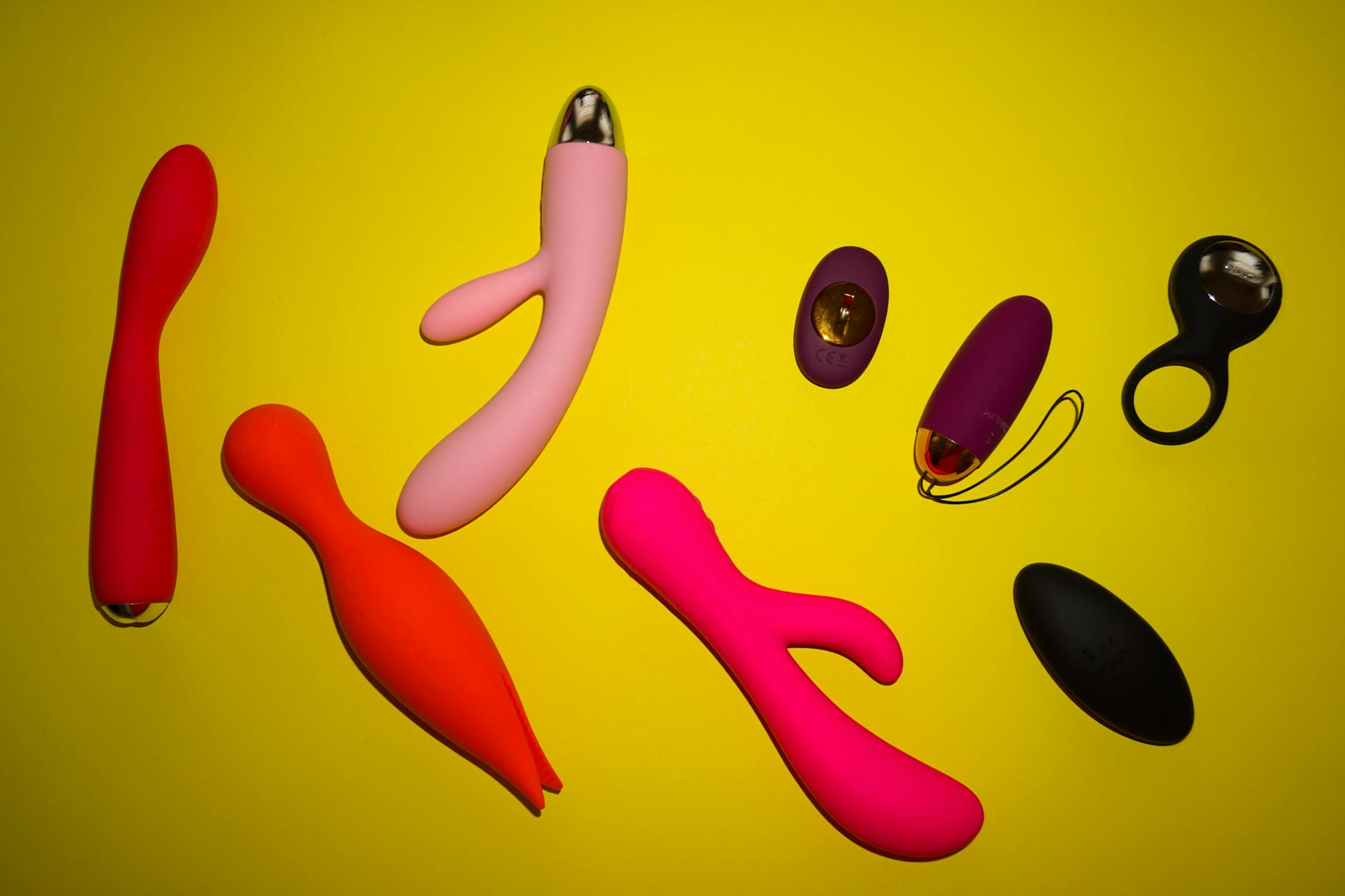
Photo by FounderTips . on Pexels
FAQ: Questions new couples actually ask
What if my partner thinks I'm criticizing their ability to make me orgasm?
This fear is almost universal. Here's what I tell clients: frame it as curiosity, not complaint. "I want to see how this feels" is different from "you're not doing this right." The way you introduce it sets the tone for how they receive it. If you're genuinely exploring together (not performing for them, not self-conscious), they'll feel that difference. New relationships are built on these small moments of honesty. This is one of them.
Can we use it during partner sex, or is it a solo thing?
Definitely during. A lemon vibrator is compact enough to use while you're together in most positions. It's not intrusive or complicated. Some couples find it becomes part of their regular routine pretty quickly. Others use it occasionally. Both are totally normal. Start by exploring it solo or with non-penetrative touch, then expand from there once you're both comfortable.
What if one of us is way more enthusiastic about toys than the other?
That's actually really common and completely manageable. Enthusiasm imbalance doesn't mean someone's wrong. One partner might be excited to try everything tomorrow. The other might need months to warm up. The lemon vibrator works here because it's low-pressure. The enthusiastic partner doesn't have to convince or cajole. They just offer it, respect if the answer is "not yet," and keep the door open.
Is it weird to talk to a new partner about this before we've been sexual yet?
Not at all. If you're considering being sexual together, you can definitely talk about pleasure, comfort, and curiosity before clothes come off. In fact, that conversation often makes the actual experience better because you both know what you're walking into. New couples who talk about what they like and what they want to explore usually have more confidence and less anxiety.
How do we know when the right time is to introduce it?
There's no magic timeline. Some couples are ready after a few weeks. Some need several months to feel safe. The real indicator is when you both feel a baseline of comfort and trust. You can laugh together without it being mean. You can be a little awkward without it feeling like rejection. Once you have that foundation, introducing something new usually goes smoothly. If you're having doubts about basic safety or trust, that's worth addressing first.
What if we try it and neither of us likes it?
Then you tried something together and it didn't work out. That's useful information. Not everything lands with every couple. The fact that you were willing to explore means something. You can put it away without it being a thing, and move forward knowing you gave each other permission to be curious. That permission is what matters, not the specific toy.
The real benefit
When I reflect on the couples I've worked with who moved through this phase smoothly, the ones with the strongest foundations afterward, the pattern is clear. They weren't couples who knew exactly what they wanted. They were couples who were willing to be uncertain together, who could laugh when something felt awkward, and who stayed curious about each other's experience.
A lemon clitoral vibrator becomes the object that makes that possible. It's small enough to not be scary. It's approachable enough to be interesting. It's straightforward enough that you're both learning together instead of one person performing for another.
If you're a new couple thinking about this, I'd encourage you to let yourself be curious. The vulnerability you're feeling is actually a sign that you care about getting this right. That matters.